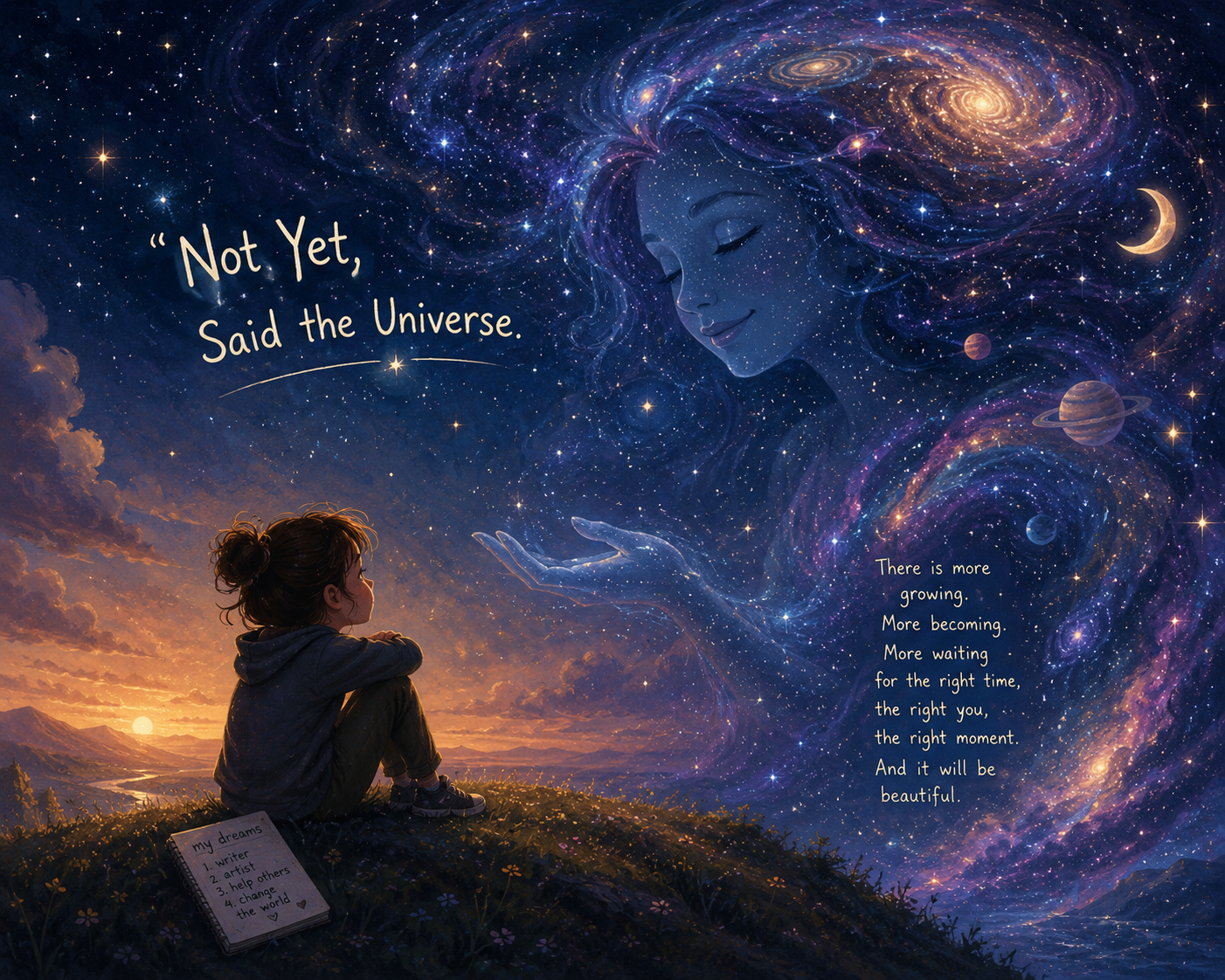
On the morning Clara Vale decided to disappear, the universe sent her a parking ticket. It was tucked beneath the windshield wiper of her old blue Honda, damp from the night rain and printed with the kind of official indifference that made everything worse. Clara stood on the sidewalk with one suitcase in her hand and stared at it for several seconds before she began to laugh.
It was not a happy laugh. It was the laugh of a woman who had spent the last eleven months watching her life come apart with such remarkable efficiency that even disaster had begun to feel repetitive. Her father was dead. Daniel was gone. The magazine where she had worked for nine years had folded on a Tuesday morning without warning, leaving thirty-two people standing beside their desks with cardboard boxes and stunned expressions. Her literary agent, who had once called Clara’s novel “the book I have been waiting my whole career to find,” had stopped answering emails and finally sent a four-line message explaining that their visions were no longer aligned.
And now there was the parking ticket.
Clara pulled it from the windshield, crushed it in her fist and shoved it into her coat pocket. At eight forty that morning, she was supposed to be at St. Vincent’s Publishing House for the most important meeting of her life. At nine fifteen, she was supposed to sit across from a senior editor who had found her manuscript in an old submission archive and asked why, in God’s name, no one had published it. By ten o’clock, if everything went well, someone might finally say yes.
Instead, Clara put her suitcase in the trunk and drove north.
She had no destination. That was the point. For seven years she had lived as though every road led somewhere important, as though patience were a kind of currency and the universe kept careful accounts. She had written before work and after work, in cafés, on trains, in laundromats and hospital waiting rooms. She had written beside her father’s bed while machines breathed for him and nurses moved quietly through the blue hours before dawn. She had written after his funeral because grief had made sleep impossible.
The novel became the one thing in her life that did not leave. People did.
Daniel had loved her for five years and waited for her for four of them. He waited through the first draft, the second draft, the agent search, the rejections, the revisions and the collapse of a small publishing house that had almost bought the manuscript. Almost. That word had followed Clara everywhere. Almost published. Almost married. Almost happy.
The last night Daniel stood in their kitchen, he looked older than thirty-six. He did not shout. That somehow made it worse. He simply rested both hands on the back of a chair and told her he could no longer live in the waiting room of her life.
Clara had wanted to tell him that she was waiting too. Instead she said, “Then don’t.”
He left the next morning.
Eleven months later, St. Vincent’s called. For three days Clara allowed herself to believe that perhaps the long arithmetic of patience had finally produced an answer. Then, at eleven forty-seven on the night before the meeting, an email arrived from the editor. It contained one sentence that mattered: they needed to discuss significant changes to the ending.
Clara read those words twelve times.
The ending was her father. Not literally, but every line of it had been written beside his hospital bed while the machines clicked and counted down the hours neither of them could stop. She had given seven years to that book and buried the person she loved most inside its final pages. She could not walk into a glass office the next morning and politely discuss making it more commercial.
At three twelve in the morning, she packed one suitcase. At seven five, she left the apartment. At seven eleven, the universe gave her a parking ticket.
By noon Manhattan was two hours behind her. By late afternoon the rain had become heavy enough to erase the road. Clara drove without music and ignored every call that lit up her phone. Somewhere in the mountains, the Honda began to shake. The engine light appeared. A moment later the car coughed once, violently, and died.
She managed to steer onto the shoulder. For a long time she sat gripping the wheel while rain hammered the roof. Then she screamed. It was not elegant or restrained. It was eleven months of rage released into a dead car on an empty road.
When she finished, the silence inside the Honda felt enormous.
A knock came at the window.
Clara nearly jumped out of her skin. An old man stood outside wearing a yellow raincoat. She lowered the window a few inches and stared at him.
“You planning to drown in there?” he asked.
She blinked. “What?”
“Road floods after dark.”
He pointed through the rain. Among the trees stood a small gas station with one flickering light above the door. Clara could have sworn it had not been there when the car stopped.
The old man introduced himself as Eli. The station looked as though it had been built before electricity and then reluctantly adapted to it. There were shelves of canned soup, fishing hooks, motor oil, batteries, postcards and three dusty snow globes. Eli called a mechanic, listened for a while and hung up.
“Tomorrow morning,” he said.
Clara closed her eyes. “Of course.”
Eli poured coffee into a paper cup and placed it in front of her. He did not ask where she was going. He asked why she was running.
Clara looked up sharply.
“People going somewhere usually know where they’re going,” he said.
She almost smiled.
Her phone buzzed on the table. St. Vincent’s Publishing appeared on the screen. Clara turned it face down.
That was when she noticed the photographs on the wall behind Eli. There were dozens of them: travelers, families, children, couples, people standing beside broken cars and holding coffee. One photograph caught her attention. A young woman in a red coat stood outside the station beside a much younger Eli. She was holding a book Clara knew instantly.
Clara rose from her chair.
“Who is that?”
Eli followed her gaze. For the first time, his expression changed.
“My daughter.”
Clara stepped closer to the photograph. The woman was Mara Ellison, author of The Winter Garden, one of the most celebrated novels of the last thirty years. Mara had published only one book before her sudden death. Clara’s father had given her that novel on her sixteenth birthday, after she confessed that she wanted to become a writer but was afraid she was not good enough.
“Mara Ellison was your daughter?” Clara asked.
Eli nodded.
That night the storm worsened and the power went out. Eli lit candles in the small apartment above the station. Perhaps it was the darkness, or exhaustion, or the strange comfort of speaking to someone she would never see again, but Clara told him everything. She told him about the book, the seven years, the rejections, Daniel, her father and the meeting she had abandoned that morning.
When she finished, Eli remained silent for so long that she regretted speaking. Then he stood and disappeared into the bedroom. He returned carrying a wooden box filled with letters.
“Mara wrote these before her book was published,” he said.
Clara shook her head. “I can’t read those.”
“You can read one.”
He selected an envelope tied into a bundle with faded blue ribbon and handed it to her. The paper was yellow with age. Mara had written the letter after receiving her forty-seventh rejection. She wrote that she was tired of hoping, tired of waiting and tired of people telling her things happened when the time was right. She had decided to burn the manuscript.
Near the bottom of the page, one sentence had been underlined twice.
Sometimes I think the universe is not saying no. I think it is saying not yet.
Clara read the sentence again. Outside, thunder moved across the mountains.
“When did she write this?” she asked.
Eli looked at the letter. “Three weeks before the publisher called.”
Clara lifted her eyes.
“She almost destroyed the book,” he continued. “Carried it behind the house with a box of matches.”
“What stopped her?”
Eli smiled faintly. “Rain.”
The next morning Clara woke to sunlight. The storm had passed. Mist floated between the trees and drops of rain clung to every branch. The mechanic arrived shortly after seven and told her the alternator was gone but the car could be repaired within a few hours.
Clara walked outside and reached into her coat pocket for the keys. Her fingers touched paper. She pulled out the crumpled parking ticket and was about to throw it away when she noticed writing on the back.
Three words appeared in blue ink.
Not yet, Clara.
Her body went cold.
She turned toward the station and called Eli’s name. No one answered. She pushed open the door. The coffee machine was silent. Dust covered the counter. The shelves that had been filled with canned soup and postcards were empty. Upstairs, there was no sofa, no candles and no wooden box of letters.
Clara stumbled outside.
The mechanic looked up from beneath the hood of her car. “You okay?”
“Where’s Eli?”
“Who?”
“The owner. The man who works here.”
The mechanic stared at her, then slowly looked toward the building.
“Lady, nobody works here.”
Clara laughed once, but there was no humor in it. “I spent the night here.”
The mechanic wiped his hands on a rag. “This station’s been closed for years.”
She felt the world become very still.
“How many years?”
He hesitated. “Twenty-two, maybe. Owner died not long after his daughter. Elias something, I think.”
Clara looked down at the parking ticket. The blue words remained.
Her phone rang.
St. Vincent’s Publishing.
This time she answered.
The editor spoke quickly. She had been trying to reach Clara since the previous morning. There had been a misunderstanding. The email had been badly worded. They did not want Clara to change the ending. They wanted to discuss building the entire campaign around it.
“We want the book,” the editor said. “Clara, we want to publish it.”
For several seconds Clara could not speak. The mountains blurred in front of her. Somewhere above the trees, a bird called into the clear morning.
She looked again at the three words written on the back of the ticket and began to laugh.
This time, it was a happy laugh.
Six months later, Clara’s novel sold in fourteen countries. A year later, twenty-three. Daniel did not come back. That surprised her. Somewhere deep inside, she had believed success would restore everything success had cost her. It did not. Life was not that kind of story.
But Clara kept writing. Some books succeeded. Some failed. Her father remained dead. Daniel remained gone. There were mornings when grief returned without warning and evenings when nothing made sense. Yet she never again mistook delay for refusal.
She framed the parking ticket and hung it above her desk.
Over the years, the blue ink slowly faded until the words became almost invisible. Almost.
And on difficult nights, when a manuscript failed or a door closed or life seemed to be taking too long, Clara would switch off the lamp and sit quietly in the dark. Then she would remember the storm, the abandoned gas station, the old man in the yellow raincoat and the sentence written by a dead woman twenty-two years before Clara needed to read it.
Sometimes the universe says no. Sometimes it says nothing at all. But every now and then, when you are very lost, very tired and standing at the exact place where you are about to give up, the universe leans close enough to whisper: not yet.